
What Lipstick Shade Actually Suits You, by Color Season
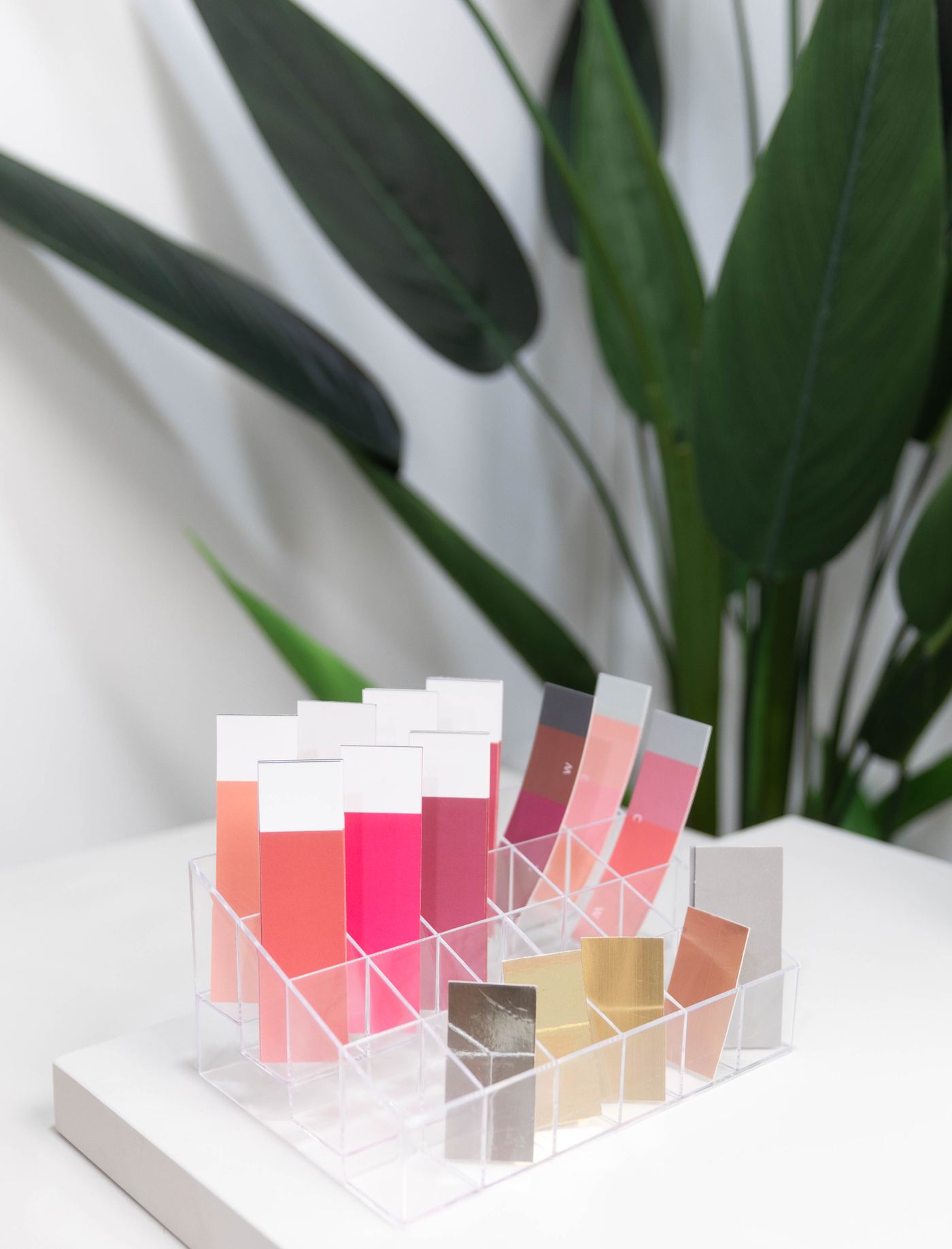
A client once brought in a red lipstick she'd bought on a friend's recommendation, the kind sold as "the one red that works on everyone." It didn't work on her. That's not unusual. Red isn't one color as far as skin is concerned, and neither is any other shade people call universal.
Why doesn't "the universal red" actually work for everyone?
Red splits into warm and cool just like every other color, and most "universal" claims are really talking about one or the other. A tomato-leaning red with orange in it reads completely differently on cool skin than a blue-leaning red does, and a shade sold as flattering "on everyone" was tested on a narrower range of people than the label suggests. The same is true for nude, pink, and berry.
How does color season change what actually works?
Undertone alone gets you halfway there. Color season adds depth and contrast on top of it, which is why two people can share the same warm undertone and still need different lipsticks: one wearing high contrast against dark hair and pale skin, the other much softer overall. We map all of this together in a full color season reading, since undertone by itself leaves out half the picture.
What lipstick shades work for warmer seasons like Spring and Autumn?
Spring tends to suit clear, warm shades: coral, warm pink, peachy red. Autumn goes deeper and earthier: terracotta, brick, warm brown-red. Both are warm, but Autumn can carry more depth without looking heavy, while Spring usually looks better lighter and brighter.
What about cooler seasons like Summer and Winter?
Summer suits soft, cool shades: rose, mauve, muted berry. Winter can take the same cool family much further: true red, blue-based berry, deep wine. The undertone is the same across both, but Winter's higher contrast means it can wear a stronger, more saturated shade that would overwhelm Summer's softer coloring.
Does the shade's depth matter as much as its undertone?
Often more. A perfectly cool-toned nude can still look wrong on someone with high natural contrast, since it flattens a face that reads better with definition. This is the same undertone logic behind blush and foundation, just with depth playing a bigger role in how a lip color reads from across a room.
Explore more from Soori Studio
- Foundation Shade Matching: Why Undertone Matters More Than Skin Tone
- Warm or Cool Blush? How to Pick the Right Pink
- What Is Your Color Season?
You were meant to shine, as you are.